One Tariff to Rule Them All: The Case for a Unified Tariff Structure
Recent headlines have shifted from load-shedding to a more pressing issue: soaring tariffs. The recent legal battles, such as Nasha’s loss in court regarding tariff approvals, and criticism from figures like Mr. Gumede over the flawed municipal tariff calculations, highlight a growing concern about the state of our municipal finances and the fairness of our tariff structures.
With only 66 municipalities having submitted a cost of supply study and a mere 34 with clean audits, it’s clear that mismanagement and corruption are rampant. But how did we get here?
Tracing the roots back to the late 1980s, municipalities began taking on new roles, and the early 1990s saw the introduction of various tariffs, including time-of-use tariffs. Back then, electricity was relatively cheap—around 12 to 10 cents per kilowatt hour. Today, however, municipalities like Ekurhuleni are charging over 10 rands per kilowatt hour during peak times, making it more economical for businesses to rely on diesel generators rather than the grid.
The complexity of navigating over 1,300 tariffs has led to many South Africans paying more for electricity than necessary, simply due to inefficiencies and inconsistencies in the system. This is compounded by the fact that people in municipalities often pay significantly more than those purchasing electricity directly from ESKOM.
Given this scenario, a unified tariff structure for the entire country could be a solution. By adopting a single tariff system, municipalities could potentially align their rates with current ESKOM rates, leading to an over-recovery of 30 to 40% due to bulk consumption discounts. This would ensure fairness and transparency, providing all South Africans with equitable access to affordable electricity.
The looming 36% increase in electricity costs underscores the urgency of addressing this issue. As the utility debt spiral continues—where rising prices lead to decreased sales and further price hikes—more South Africans are turning to alternative energy sources like solar and batteries. This shift exacerbates ESKOM’s financial struggles, as their revenue model based on sales volume is increasingly unsustainable.
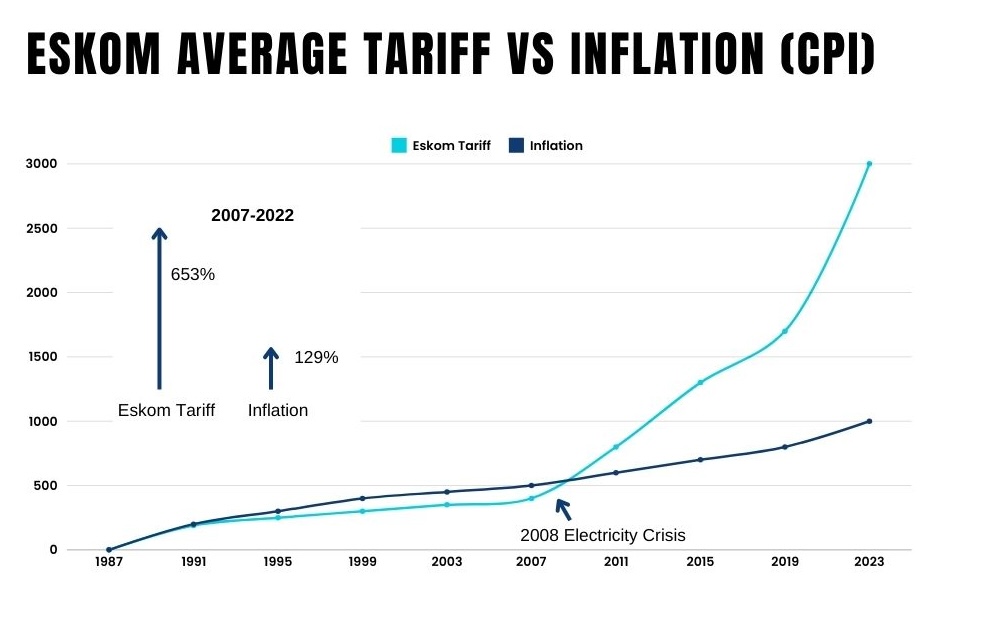
To break the cycle, we need a unified approach to tariffs. Instead of allowing municipalities and ESKOM to set arbitrary rates, a standardised tariff system could stabilise costs and support economic growth. This would reduce the financial burden on businesses and individuals alike, fostering a more equitable environment for all.
The current state of tariffs is unsustainable and detrimental to South Africa’s economic health. As we navigate these challenges, it’s crucial to advocate for a fair, unified tariff system that ensures affordability and supports our nation’s development.